西安交通利物浦大学设计学院
Xi'an Jiaotong-Liverpool University School of Design
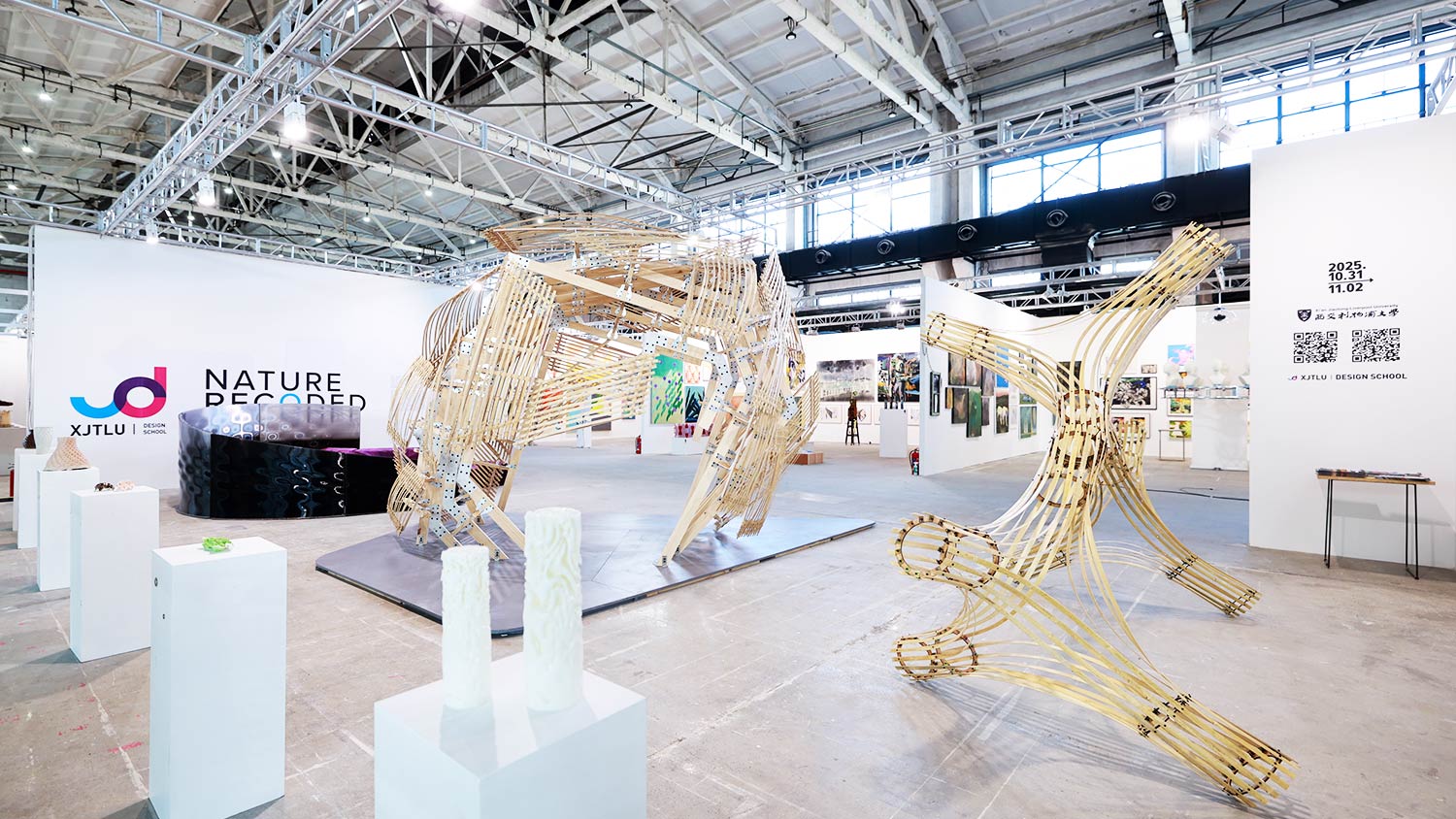
《自然重释》探索自然形态与材料如何在当代设计与数字技术中被转译、转化与再表达。展览呈现了一系列作品,包括竹融合(Bamboo Fusion)、涟漪(Ripple Screens)与计算多孔性(Algorithmic Porosity)等,探索了传统与创新之间、物质与计算之间的微妙交汇。 从本质上说,《自然重释》回应了一个简洁却深远的问题:在数字时代,我们该如何重新与自然建立关系?自古以来,设计师与工匠们从山川草木中汲取灵感。竹、石、木、土不仅是建造的材料,更蕴含着关于韧性与适应的智慧。而在当下被数字技术深刻塑造的时代,这些熟悉的材料开始呈现出新的面貌。它们不再只是传统的物质,而是被转译为算法与代码,成为计算模型,并在数字化的过程里被重新表达,展现出超越“自然”与“人工”二元界限的可能性。本次我们展出的作品正是对这种再生逻辑的探索:竹结构并非对传统手艺的怀旧,而是一种混合的构造实验,让数字的精确性与竹的柔韧性形成共鸣;涟漪不是水的复制,而是水之运动被转化为空间的节奏;而多孔的几何体,也不仅仅是对骨骼的模仿,而是对生命形态背后逻辑的再演绎。 在这组展品中,自然不再是被动的资源,而成为设计的伙伴,与我们共同推动未来的想象。自然的逻辑被重新书写,化作当代的文化实践,成为更新与创造的力量。本次展览的愿景,是可持续的:它不仅关乎节约,更关乎人与物质世界关系的重建;是创造性的:不是将形式强加于材料,而是在交流与对话中发掘其潜能;也是技术性的:技术不再是冰冷的工具,而是一种翻译的语言,使我们得以以新的方式与世界沟通。《自然重释》邀请我们去想象未来的生活与创造将以何种姿态展开。它展望了一种新的可能:自然、技术与人类的想象彼此交织,在重释的过程中塑造出既根植于现实、又不断延展的未来生态。 西交利物浦大学设计学院团队: Juan Carlos Dall'Asta, Teo Hidalgo Nacher, Leyuan Jiang, Jingyang Liu, Yang Song Emanuela Corti, Ivan Parati.
Reinterpretation of Nature explores how natural forms and materials are translated, transformed, and re-expressed in contemporary design and digital technology. The exhibition presents a series of works, including Bamboo Fusion, Ripple Screens, and Algorithmic Porosity, which explore the subtle intersections between tradition and innovation, materiality and computation. At its core, Reinterpretation of Nature responds to a simple yet profound question: How do we reconnect with nature in the digital age? Since ancient times, designers and artisans have drawn inspiration from mountains, rivers, plants, and trees. Bamboo, stone, wood, and earth are not merely materials for construction; they embody wisdom about resilience and adaptability. In an era profoundly shaped by digital technology, these familiar materials are beginning to take on new forms. They are no longer just traditional substances but are being translated into algorithms and code, transformed into computational models, and re-expressed through digital processes, revealing possibilities that transcend the binary division of "natural" and "artificial." The works showcased in this exhibition are precisely explorations of this regenerative logic: the bamboo structures are not nostalgic recreations of traditional craftsmanship but hybrid constructive experiments that resonate with the precision of the digital and the flexibility of bamboo; the ripples are not mere imitations of water but the translation of water's movement into the rhythm of space; and the porous geometries are not simply mimics of skeletal forms but reinterpretations of the logic behind life's structures. In this collection of works, nature is no longer a passive resource but a partner in design, collaborating with us to advance future imaginaries. The logic of nature is being rewritten, transforming into contemporary cultural practices that become forces of renewal and creation. The vision of this exhibition is sustainable—it is not merely about conservation but about reimagining the relationship between humans and the material world; it is creative—not imposing forms onto materials but uncovering their potential through dialogue and exchange; and it is technological—where technology is no longer a cold tool but a language of translation that enables us to communicate with the world in new ways. Reinterpretation of Nature invites us to imagine how future living and creativity may unfold. It envisions a new possibility where nature, technology, and human imagination intertwine, shaping a future ecology that is both grounded in reality and constantly expanding through the process of reinterpretation. Team from the School of Design, Xi'an Jiaotong-Liverpool University: Juan Carlos Dall'Asta, Teo Hidalgo Nacher, Leyuan Jiang, Jingyang Liu, Yang Song, Emanuela Corti, Ivan Parati.