温州肯恩大学
Wenzhou-Kean University
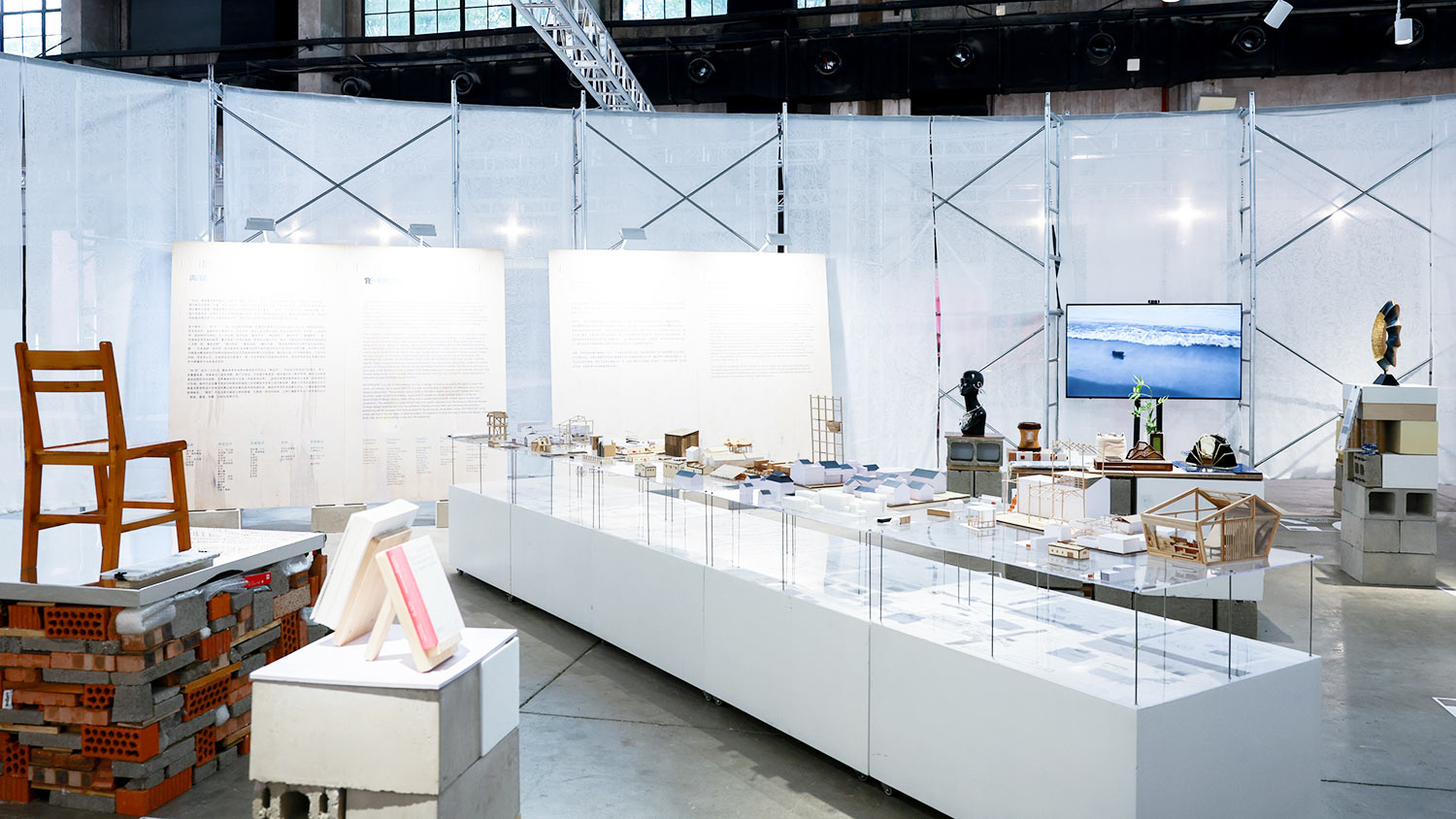
温州肯恩大学融合美式课程体系与中国教育语境,实行全英文教学,并汇聚国际化师资。学院下 设公共建筑学院与设计学院,开设建筑学、平面设计、工业设计、室内设计等中美双学位项目 (其中建筑学硕士近期获美国 NAAB 认证)。学院以二十世纪后期美国后现代主义建筑大师、 产品设计师及普林斯顿大学教授迈克尔·格雷夫斯命名――他作为跨学科设计实践的典范,跨越媒介,地域,社群,为大众设计,并将设计实践与教育教学紧密结合。坐落于浙南温州山水环抱、经济活跃的温州肯恩大学校园内,葛和凯楼作为动态创新的设计教学空间,集工作室、展厅、创客工坊与设计实验室于一体,为师生提供共享的实践场所。依托中外合作办学的基础,学院逐渐 形成独具特色的东⻄方设计教育文化――这一异质共存的体系,以跨国界、跨学科的学术实践为核心,通过实验性与探索性教学,推动亚洲与⻄方设计文化及语境的积极对话。目前,学院持续开展中美联合工作坊、工作室及设计研究项目,促进温州肯恩大学与美国肯恩大学之间的人才与思想流动。迈克尔格雷夫斯学院的教育理念在于突破课堂理论的边界,通过本地与国际的实践项目、研究计划及社区服务,将学习延伸至课堂之外。在“将设计推向公共领域”的指导下,师生协 作探索,实现知识应用、创新实践与社会影响的有机结合。 本次展览――“再/现”――是一部近年作品选集,汇聚温州肯恩大学与美国肯恩大学迈克尔格雷夫斯学院师生的创作,涵盖图形与雕塑艺术、交互设计、新型工具及算法流程。作品或直接利用“废弃物”,或旨在将“废弃物作为材料”进行再利用,系列包括:“重造木作”“再造塑料”“重组废料”“重编物质”。数字媒体及其界面创新在“重介现实”中得以探索;更多项目通过方法、路径、过程及设计师角色的再创造切入主题,如:“重绘田野”“再创传统”“重思实践”“重估价值”。展览呈现跨文化与跨地域的废弃物议题――尤其强调“废弃物”是中美两国 (全球最大的两大城市废弃物生 产国)共同关注的问题。来自两方迈克尔格雷夫斯学院的作品都将废弃材料视为灵感来源和新形式的基础。循环设计是一个四维的概念,不仅包含时间、历史和记忆,还强调在设计教育中,唯一不变的是其与时俱进的相关性,而这种相关性正是通过学科的不断重构与创新来实现的。 “再/现”成为一次号召,重新思考如何用创新型的方式定义“再设计”,并延续可持续设计的理念,用过去重塑未来。更广泛地说,它也是对再造这一循环理念的一系列思考。展览几乎完全由温州迈克尔格雷夫斯学院设计大楼及布展过程中收集的废弃物构建而成,展后所有材料将拆解并回收,以便在其他场地获得新生。
Wenzhou-Kean University integrates the American curriculum system with the Chinese educational context, offering instruction entirely in English and bringing together an international faculty. The university comprises the College of Public Architecture and the College of Design, offering dual-degree programs in fields such as architecture, graphic design, industrial design, and interior design (with the Master of Architecture program recently accredited by the U.S. NAAB). The college is named after Michael Graves, a renowned American postmodernist architect, product designer, and Princeton University professor from the late twentieth century. Graves serves as a model for interdisciplinary design practice, transcending media, geography, and communities to design for the public and closely integrating design practice with teaching and education. Located within the vibrant, economically active campus of Wenzhou-Kean University, nestled amidst the mountains and waters of southern Zhejiang, the Gehekai Building serves as a dynamic and innovative space for design education. It brings together studios, exhibition halls, maker workshops, and design laboratories, providing a shared environment for hands-on practice for faculty and students. Building on the foundation of Sino-foreign cooperative education, the college has gradually developed a distinctive educational culture that blends Eastern and Western design traditions. This heterogeneous coexistence centers on transnational, interdisciplinary academic practice and promotes active dialogue between Asian and Western design cultures and contexts through experimental and exploratory teaching. Currently, the college continues to organize joint Sino-American workshops, studios, and design research projects, facilitating the exchange of talent and ideas between Wenzhou-Kean University and Kean University in the United States. The educational philosophy of the Michael Graves College lies in transcending the boundaries of classroom theory. Through local and international practical projects, research initiatives, and community service, learning extends beyond the classroom. Guided by the principle of "bringing design into the public sphere," faculty and students collaborate to explore the seamless integration of knowledge application, innovative practice, and social impact. This exhibition—"Re/New"—is a curated collection of works from recent years, bringing together creations by faculty and students from the Michael Graves College at Wenzhou-Kean University and Kean University in the United States. The works span graphic and sculptural art, interactive design, innovative tools, and algorithmic processes. Some pieces directly utilize "waste materials," while others aim to reuse "waste as material." The series includes: "Reconstructing Wood," "Reforming Plastics," "Reassembling Scraps," and "Reweaving Matter." Digital media and its interface innovations are explored in "Reinterfacing Reality." Other projects engage with the theme through the recreation of methods, pathways, processes, and the designer's role, such as: "Redrawing Fields," "Reinventing Traditions," "Rethinking Practice," and "Reevaluating Value." The exhibition addresses cross-cultural and cross-regional issues of waste—particularly emphasizing that "waste" is a shared concern for China and the United States, the two largest producers of urban waste globally. Works from both Michael Graves Colleges view discarded materials as sources of inspiration and foundations for new forms. Circular design is a four-dimensional concept encompassing time, history, and memory, while emphasizing that the only constant in design education is its evolving relevance—achieved through the continuous reconstruction and innovation of the discipline. "Re/New" serves as a call to rethink how "redesign" can be defined in innovative ways, perpetuating the ethos of sustainable design to reshape the future with the past. More broadly, it is also a series of reflections on the cyclical idea of renewal. The exhibition is almost entirely constructed from waste materials collected during the design and installation process at the Michael Graves College building in Wenzhou. After the exhibition, all materials will be disassembled and recycled, ready to be given new life in other venues.